Waking up sweaty at night? How bedroom humidity, CO₂ and MVHR affect comfort
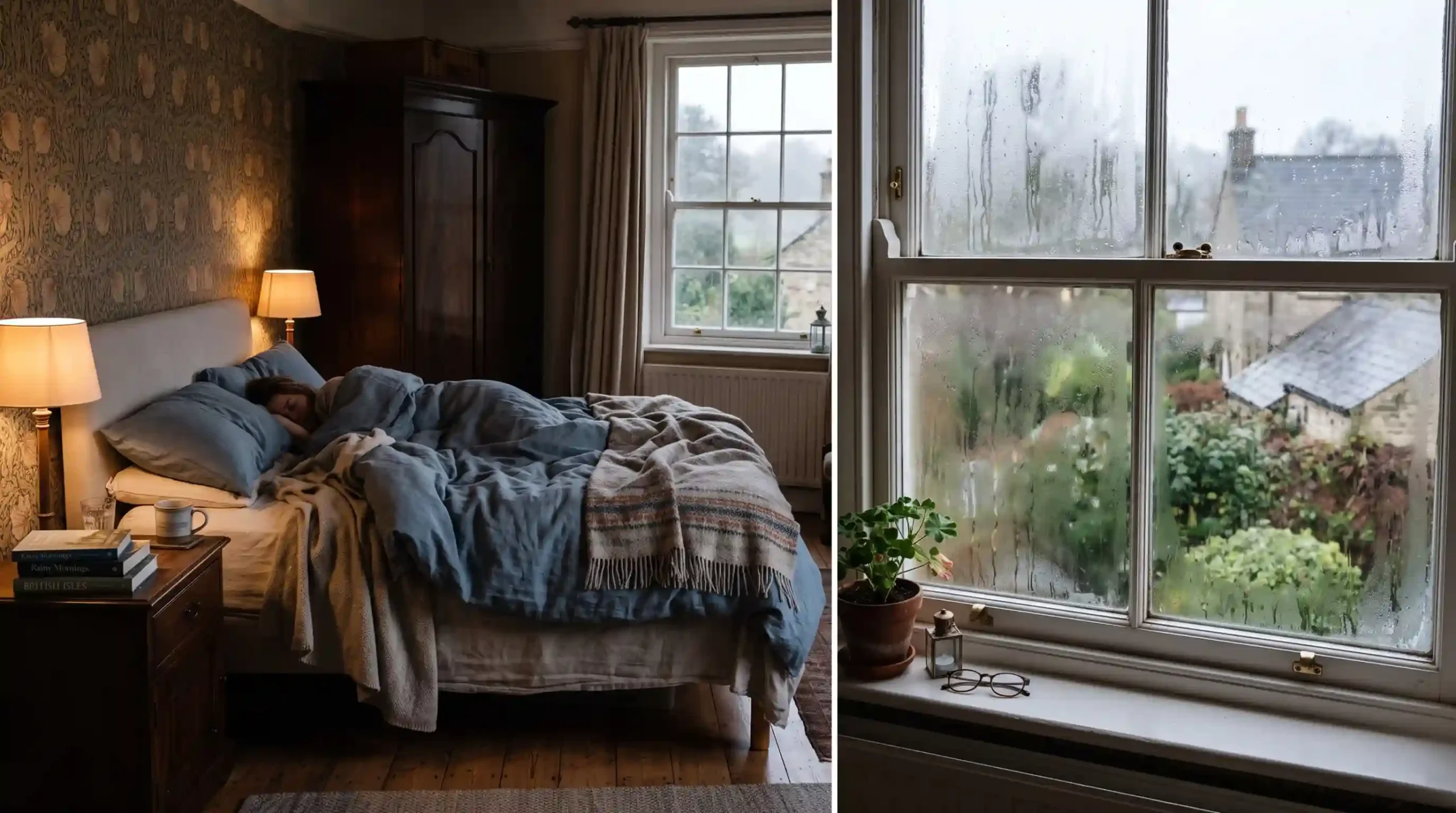
“Waking up at 3am, heart racing, too hot to breathe. It wasn’t anxiety.”
You wake up in the middle of the night feeling hot, sweaty and uncomfortable. The air feels heavy, the bedroom seems stuffy, and opening the window is the only thing that makes it feel better.
But what if the problem is not simply the temperature?
High humidity, inadequate ventilation and elevated CO₂ levels can all contribute to a stuffy indoor environment, making a bedroom feel uncomfortable during the night.
For modern, well-insulated homes, MVHR — Mechanical Ventilation with Heat Recovery — can provide continuous fresh air while helping to retain heat.
Why do I wake up sweating at night? Bedroom humidity and poor ventilation
Night-time sweating can have many possible causes, including room temperature, bedding, clothing, stress, illness and certain medical conditions.
However, the indoor environment also matters.
When several people sleep in a room with insufficient ventilation, they continuously release moisture and CO₂ into the air. During the night, this can gradually increase humidity and make the room feel warmer and more stuffy.
You may notice:
- waking up feeling hot;
- sweating during the night;
- stuffy or heavy air;
- condensation on windows;
- a damp feeling in the bedroom;
- difficulty getting comfortable;
- needing to open the window to feel better.
If this happens regularly, it may be worth checking your bedroom’s ventilation and humidity levels.
High humidity in the bedroom at night: why does the air feel so stuffy?
Humidity is an important part of indoor comfort.
When humidity is too high, sweat evaporates less effectively from the skin. As a result, the body may find it harder to lose heat, and the room can feel warmer and more uncomfortable even when the actual temperature has not changed significantly.
Sleeping, breathing and everyday activities all add moisture to indoor air.
In a poorly ventilated bedroom, this moisture can accumulate overnight.
That is why high bedroom humidity and poor ventilation often go together.
High co₂ levels in the bedroom: can poor ventilation make you feel breathless?
CO₂ levels naturally increase when people breathe in an enclosed room.
If there is not enough fresh air entering the bedroom, CO₂ can accumulate overnight.
High CO₂ levels are primarily an indicator of insufficient ventilation. Elevated indoor CO₂ has also been associated with poorer perceived air quality and can be accompanied by symptoms such as stuffiness, sleepiness and difficulty concentrating.
However, feeling genuinely short of breath or having a racing heart should not automatically be blamed on CO₂ or ventilation. These symptoms can have many causes. If they are severe, recurrent or concerning, medical advice should be sought.
MVHR ventilation for bedrooms: fresh air without opening the window
One of the simplest ways to improve ventilation is to open a window.
But this is not always practical.
In winter, opening the window can allow heated air to escape. In summer, warm outdoor air can enter the bedroom. Noise, pollen, insects and outdoor pollution can also make open-window ventilation undesirable.
This is where MVHR for bedrooms can provide an alternative.
An MVHR system continuously extracts stale, moisture-laden indoor air and supplies fresh outdoor air.
At the same time, the heat exchanger transfers heat from the outgoing air to the incoming air.
The result is fresh air with controlled ventilation and reduced unnecessary heat loss.
how does an MVHR system reduce humidity in the home?
An MVHR system does not simply cool a room.
Its main purpose is to provide controlled ventilation.
Moist air from areas such as bathrooms, kitchens and other rooms is extracted and replaced with fresh outdoor air. This helps prevent moisture from remaining trapped inside the property.
A correctly designed system can therefore help manage indoor humidity and reduce the conditions that contribute to:
- condensation;
- dampness;
- stale air;
- persistent moisture;
- mould growth.
However, MVHR should not be viewed as a cure for existing damp or mould problems. The underlying cause of excess moisture must always be identified.
Heat recovery ventilation for a bedroom: how does it work?
Heat recovery ventilation uses a heat exchanger to transfer energy between the outgoing and incoming air streams.
The basic process is:
- Warm, stale air is extracted from the property.
- Fresh outdoor air enters the MVHR system.
- The two air streams pass through a heat exchanger without mixing.
- Heat from the outgoing air is transferred to the incoming air.
- Fresh air is supplied to the living spaces.
This allows the property to remain ventilated without relying on permanently open windows.
MVHR vs opening windows: which is better for night-time ventilation?
Opening a window can provide a rapid supply of fresh air, but it is not always convenient or energy-efficient.
Opening windows
Advantages:
- simple;
- immediate ventilation;
- no ventilation system required.
Disadvantages:
- heat loss in winter;
- outdoor noise;
- pollen and insects;
- less control over airflow;
- windows need to be opened manually.
MVHR ventilation
Advantages:
- continuous controlled ventilation;
- fresh air throughout the night;
- heat recovery;
- less reliance on open windows;
- helps manage moisture and indoor air quality.
For a modern, well-insulated home, MVHR can provide a more controlled approach to ventilation than simply opening windows whenever the air feels stuffy.
Best bedroom ventilation for better sleep: what should you check?
If you regularly wake up hot, sweaty or uncomfortable, start by checking the conditions in your bedroom.
Consider monitoring:
- room temperature;
- relative humidity;
- CO₂ concentration;
- ventilation performance;
- condensation on windows;
- whether the room feels stuffy after several hours with the windows closed.
A simple indoor air quality monitor can help you understand what happens during the night rather than relying solely on how the room feels when you wake up.
What is the ideal bedroom humidity at night?
There is no single humidity level that guarantees perfect sleep for everyone, but excessively high indoor humidity can contribute to discomfort and condensation.
As a general target, many homes aim to keep indoor relative humidity somewhere around 40–60%, although the appropriate level depends on the building, season and individual circumstances.
If humidity remains consistently high, ventilation should be investigated.
An MVHR system for the home can help provide continuous air exchange and remove moisture at its source.
MVHR for humidity control: can heat recovery ventilation prevent condensation?
Condensation occurs when moist indoor air comes into contact with a surface that is cold enough for water vapour to condense.
Bedrooms can be particularly susceptible because people release moisture while sleeping.
If ventilation is insufficient, humidity can rise overnight, increasing the potential for condensation on colder surfaces such as windows.
MVHR ventilation helps by continuously removing moisture-laden air and replacing it with fresh air.
This can contribute to better humidity control, particularly when the system has been correctly designed, installed and balanced.
MVHR installation for a home: why correct ventilation design matters
The performance of an MVHR system depends heavily on the design and installation.
Simply installing a ventilation unit is not enough.
A properly designed MVHR installation should consider:
- the size and layout of the property;
- the number of occupants;
- required airflow rates;
- supply and extract locations;
- ductwork design;
- system balancing;
- filtration;
- acoustic performance;
- regular maintenance.
Bedrooms, bathrooms, kitchens and living spaces have different ventilation requirements, so the system should be designed around the way the property is actually used.
Waking up hot and sweaty at night: is it always the air?
No.
Night sweats and waking up feeling overheated can have many causes. Bedroom temperature and humidity are only part of the picture.
Persistent or unexplained night sweats can sometimes be associated with medical conditions, medications, hormonal changes, infections or other health issues.
Similarly, breathlessness, chest pain, fainting or a racing heart should not simply be attributed to poor ventilation.
If night sweats, breathlessness or other concerning symptoms happen regularly, speak to a healthcare professional.
The purpose of improving ventilation is to create a healthier and more comfortable indoor environment — not to diagnose or treat medical conditions.
Fresh air at night without opening windows: is MVHR the solution?
If your bedroom regularly feels hot, stuffy or humid during the night, improving ventilation is worth considering.
MVHR provides controlled fresh-air supply and extraction while recovering heat from the outgoing air.
Instead of waking up at 3am to open the window, you can have a ventilation system continuously exchanging indoor and outdoor air throughout the night.
The aim is simple:
less stale air, better humidity control and a more comfortable indoor environment — without unnecessarily losing the heat you have already paid for.
MVHR ventilation for better indoor comfort and air quality
A comfortable bedroom is not only about having the right heating setting.
It is also about the quality of the air you breathe throughout the night.
If you regularly wake up feeling hot, sweaty or uncomfortable, check your temperature, humidity, CO₂ levels and ventilation.
For modern, energy-efficient and well-insulated homes, Mechanical Ventilation with Heat Recovery (MVHR) can provide a controlled way to maintain fresh air while helping to retain heat.
Need Help Choosing an MVHR System?
Not sure whether your home needs better ventilation or whether an MVHR system is right for your property?
A professional assessment can help determine the required airflow, system capacity and the most suitable ventilation solution for your home.
Would you like to find out more or discuss ventilation for your home?
Call us on +44 768 901 186
Fresh air throughout the night. Comfortable temperatures. Less reliance on open windows.
Breathe better. Sleep more comfortably. Keep the heat in your home.

Want to know more?
Request a free consultation with our ventilation experts to discuss your specific needs.
Our Featured Glasses
-
Sale!

Climtec 200mm Activated Carbon Filter (Optional Upgrade)
£25Original price was: £25.£19Current price is: £19. -
Sale!
Climtec 200mm Decorative Outer Ring
£30Original price was: £30.£24Current price is: £24. -
Sale!
Climtec 100mm Decorative Outer Ring
£12Original price was: £12.£9Current price is: £9. -
Sale!
Climtec 100mm Activated Carbon Filter (Optional Upgrade)
£25Original price was: £25.£19Current price is: £19.

