Say Goodbye to Damp Walls Forever: How the Right Home Ventilation System Can Rescue Your Property
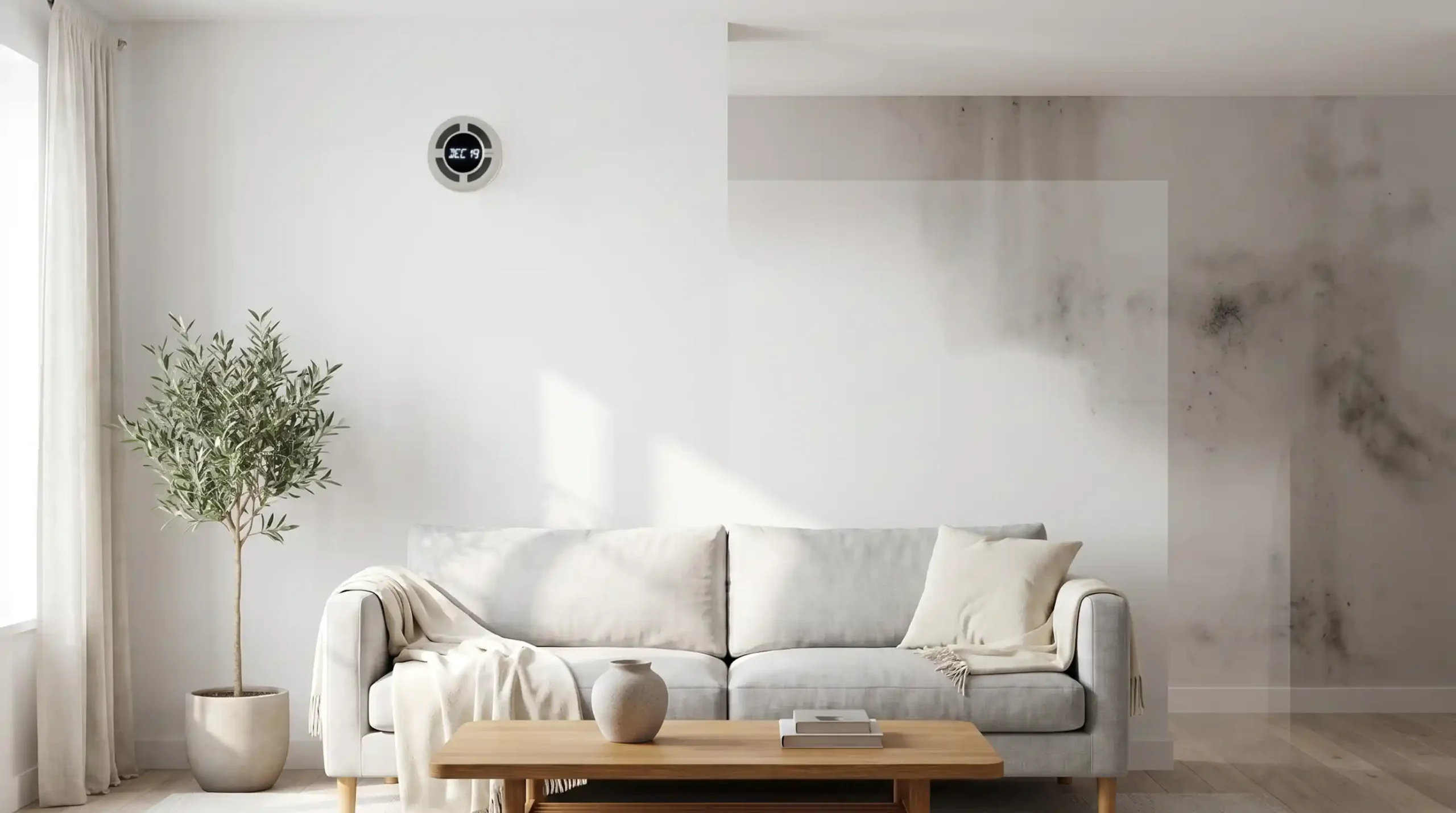
There is a particular kind of dread that comes from running your hand across a wall and feeling it cold and slightly wet to the touch. You repaint. You buy a dehumidifier. You stuff the window frame with draught excluders. And a few months later, the black speckles are back — creeping across the corner of the bedroom ceiling, reappearing behind the wardrobe, staining the grout in the bathroom tiles.
If this sounds familiar, you are not alone. Condensation damp and mould growth affect an estimated one in five homes across the UK. And here is what most people are never told: no amount of bleach, waterproof paint, or insulation will permanently fix the problem — because those approaches treat the symptom, not the cause.
The cause is air. Specifically, the lack of it moving properly through your home.
Why your walls are wet (and why you can't just open a window)
Every day, a typical household generates an enormous amount of moisture. Cooking, showering, breathing, drying laundry — all of it releases water vapour into the air. In a well-sealed modern home, that moisture has nowhere to go. It circulates, cools, and settles on your coldest surfaces: external walls, window reveals, the gaps behind furniture.
Older properties have the opposite challenge. The draughts and gaps that make them cold in winter do allow some air movement — but they also make them expensive to heat, and the uncontrolled airflow is rarely enough to prevent damp in the rooms that matter most: bathrooms, kitchens, north-facing bedrooms.
Opening windows is the instinctive answer. But it is rarely practical in January, and in urban areas it simply trades one problem (moisture) for another (noise and poor air quality). British winters are long. The windows stay shut, the moisture stays in, and the mould returns.
What is missing is a continuous, controlled supply of fresh air — one that works regardless of the season, regardless of whether you remember to crack a window, and one that does not send your heating bill through the roof.
What heat recovery ventilation actually does
A heat recovery ventilation system — often referred to as MVHR (mechanical ventilation with heat recovery) or an HRV unit — works on a beautifully simple principle. It continuously draws stale, moisture-laden air out of your home whilst simultaneously pulling fresh air in from outside. The clever part is what happens in the middle: a heat exchanger transfers warmth from the outgoing air to the incoming air, so you are not simply letting the cold in.
The result is a constant, gentle cycle of fresh air that never lets humidity build to the point where condensation forms. No damp patches. No musty smell. No mould.
For a long time, whole-house MVHR systems were associated with new builds — large, ducted installations that required significant construction work. But the technology has evolved considerably, and single room heat recovery units have changed the picture entirely for existing homes.
Individual room ventilation solutions: a practical solution for real British homes
A single room heat recovery unit is exactly what it sounds like: a self-contained ventilator fitted directly through an external wall — no ductwork, no major building work, no upheaval. It provides controlled room ventilation wherever it is needed most, whether that is a damp bedroom, a poorly ventilated bathroom, a basement room, or a home office with stuffy air.
This is where units such as the Prana recuperators and Climtec recuperators come into their own. Both are designed specifically for wall installation in residential and commercial settings — a single core through the exterior wall, and the unit handles the rest. Fresh air in, stale air out, heat recovered throughout.
The Prana range, for instance, operates on an alternating cycle — drawing air in, then reversing to push stale air out, all through the same ceramic heat exchanger core. The result is that up to 96% of the heat that would otherwise be lost to ventilation is retained inside the room. For a house ventilation system built around individual rooms rather than a whole-building approach, this kind of efficiency makes a genuine difference to energy bills — particularly relevant given the current cost of heating in the UK.
The Climtec units work on a similar principle, with a twin-unit design that allows simultaneous supply and extract through two cores in adjacent positions — providing a continuous airflow without the alternating pause. Ideal for larger rooms, open-plan spaces, or anywhere that consistent air exchange is a priority.
Both systems are whisper-quiet, controllable via app or wall panel, and designed to run continuously in the background — the kind of domestic ventilation system that you set up, forget about, and simply notice the absence of problems that used to plague you.
Will mvhr work with old property?
This is one of the most common questions we are asked at Brilydan — and the honest answer is: yes, often better than in newer homes. Older properties, particularly Victorian and Edwardian terraces, tend to suffer acutely from damp simply because their construction offers few natural routes for moisture to escape. A single room heat recovery ventilator installed in the worst-affected room can transform the situation within weeks. Walls begin to dry out. Condensation on windows reduces. The air simply feels better.
For truly draughty properties — where the challenge is controlling uneven airflow rather than creating it — the heat recovery element becomes especially valuable. Rather than losing warmth through random gaps, you are directing the airflow deliberately and recovering the energy in the process.
The wider picture: air quality and health
It is worth mentioning, gently, that this is not just about aesthetics. Mould produces spores that aggravate asthma, trigger allergies, and are linked to respiratory problems — particularly in children and the elderly. A properly functioning home air circulation system is not a luxury; for many families, it is a meaningful health intervention. Fresh air ventilation for the home is increasingly recognised by GPs, housing charities, and building professionals as a foundational element of a healthy living environment.
Ready to find out which MVHR system your home needs?
At Brilydan, based in Oldbury in the West Midlands, we supply and install Prana and Climtec heat recovery units for homes, offices, restaurants, and commercial premises across the whole of the UK. Whether you are dealing with a single damp bedroom or planning ventilation for a renovation project, we are happy to help you find the right solution — without the jargon and without the hard sell.
Contact Brilydan today for a free consultation. Whether you need a single unit for a bathroom or a whole-house solution, our experts can recommend the perfect Prana or Climtec system for your needs.

Want to know more?
Request a free consultation with our ventilation experts to discuss your specific needs.
Our Featured Glasses
-
Sale!

Climtec 200mm Activated Carbon Filter (Optional Upgrade)
£25Original price was: £25.£19Current price is: £19. -
Sale!
Climtec 200mm Decorative Outer Ring
£30Original price was: £30.£24Current price is: £24. -
Sale!
Climtec 100mm Decorative Outer Ring
£12Original price was: £12.£9Current price is: £9. -
Sale!
Climtec 100mm Activated Carbon Filter (Optional Upgrade)
£25Original price was: £25.£19Current price is: £19.

