One solution for every building, how perfect indoor air quality is achieved anywhere – MVHR
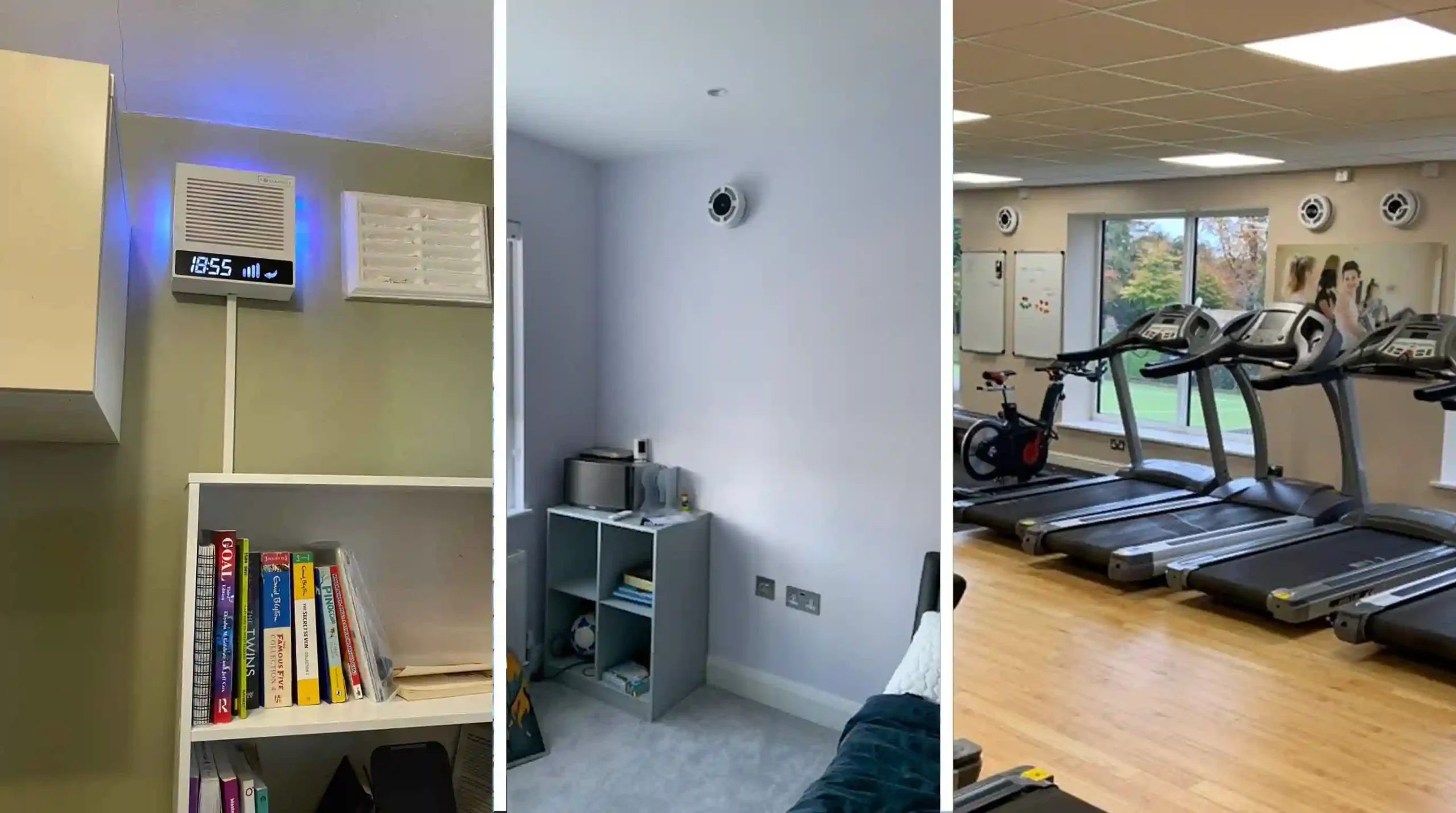
Ask most people what good ventilation looks like and they will describe something industrial — vast ductwork snaking through suspended ceilings, plant rooms humming behind locked doors, systems that exist in hospitals and airports but certainly not in their flat above a chip shop in Coventry.
The reality in 2025 is rather different. A quiet revolution has been taking place in how buildings of every type — from terraced houses to school classrooms to restaurant kitchens — manage their indoor air. And the technology behind it is both more elegant and more accessible than most people realise.
It starts with a single unit. Fitted through an exterior wall. And it works the same way whether the wall belongs to a nursery in Newcastle, an office in Birmingham, or a gym in central London.
Why indoor air quality matters more than we admit
Before getting into the how, it is worth pausing on the why — because the case for proper air quality in buildings is stronger than most people appreciate.
The average person in the UK spends approximately 90% of their time indoors. In that time, they are breathing air that — unless actively managed — accumulates CO₂, humidity, volatile organic compounds from furnishings and cleaning products, airborne pathogens, and particulates. In sealed, well-insulated buildings, these concentrations rise steadily throughout the day or night, quietly affecting concentration, productivity, comfort, and health.
This is not a new observation. Building scientists, occupational health researchers, and architects have understood the link between air quality and human performance for decades. What has changed is the technology available to address it — and the accessibility of that technology to buildings that were never designed with mechanical ventilation in mind.
A decentralised heat recovery ventilation system — one that operates room by room or zone by zone, without requiring central plant or extensive ductwork — makes genuine air quality improvement achievable in virtually any existing building, regardless of its age, size, or purpose.
What "decentralised" heat recovery ventilation system actually means
Traditional MVHR (mechanical ventilation with heat recovery) systems are centralised: one main unit, typically in a loft or plant room, pushes and pulls air through a network of ducts that runs throughout the building. They are highly effective in new builds designed around them from the start.
For existing buildings — which represent the vast majority of the UK’s built environment — installing centralised ductwork is rarely practical. It involves suspended ceilings, major disruption, significant cost, and months rather than days of work.
A decentralised MVHR system takes a fundamentally different approach. Each unit is self-contained and operates independently through its own external wall penetration. There are no ducts. No central plant. No structural upheaval. Each room or zone gets its own fresh air supply and its own stale air extract, with heat recovery happening inside each unit independently.
The result is a system that scales to any building by design — add units where they are needed, in the rooms or spaces that need them most, without touching the rest of the building. It can be installed in a single bedroom over the course of a morning, or rolled out across an entire office floor over a week. It is, in practical terms, the ventilation solution that fits around buildings rather than requiring buildings to be redesigned around it.
Homes and flats with single room heat recovery units
The most common application — and the one most people encounter first — is residential. British homes, whether Victorian terraces or modern new builds, share a common challenge: they seal well enough to retain heat but not well enough to actively manage the air inside them.
A single room heat recovery unit fitted in a bedroom addresses the specific problem of overnight CO₂ and humidity build-up. A unit in a living area manages the moisture and pollutants generated by everyday life. For flats — particularly those on upper floors with limited ventilation options — a through-the-wall unit can be the difference between a home that feels stuffy and one that feels genuinely comfortable year-round.
The home ventilation system that results is not a single large piece of infrastructure. It is a collection of independent, intelligent units, each doing its job quietly and continuously in the rooms that need it. For domestic use, this is both more affordable and less disruptive than any whole-house alternative.
Schools and nurseries: where air quality and ventilation have the highest stakes
The evidence on ventilation in educational settings is unambiguous. Studies consistently show that elevated CO₂ levels in classrooms — a near-universal condition in UK schools during winter, when windows stay shut — measurably reduce children’s concentration, comprehension, and ability to retain information.
A classroom with thirty children and a single door is, by mid-morning, running at CO₂ concentrations that would be flagged as problematic in a workplace. The children sitting in it are not lazy or inattentive — they are breathing air that is physiologically working against their ability to think clearly.
Decentralised heat recovery units change this without requiring school buildings to undergo major works during term time. Units can be fitted room by room, during holidays or weekends, with minimal disruption. Each classroom gets its own continuous fresh air supply, its own humidity control, and its own heat recovery — and the children in it get the cognitive environment they deserve.
For nurseries, where very young children spend their most developmentally significant hours, the argument is even more compelling. Fresh, managed indoor air is not a premium feature in an educational setting — it is a basic condition for effective care and learning.
Offices and Commercial Premises: The Productivity Argument of MVHR
The link between air quality and workplace productivity is well-established and increasingly hard for employers to ignore. Research from Harvard and others has quantified what most office workers have felt intuitively: in well-ventilated workspaces, cognitive performance measurably improves. Decision-making speeds up. Error rates drop. People feel more alert and less fatigued by mid-afternoon.
For commercial premises — offices, co-working spaces, retail environments — a decentralised mechanical ventilation system is both a health investment and a business one. It is also, crucially, one that does not require a landlord’s permission to gut the building. Units can be installed in individual offices, meeting rooms, or open-plan areas without affecting the building’s fabric beyond a single core per unit.
For building managers responsible for post-pandemic air quality assurance — still a live concern in many sectors — the ability to demonstrate active, continuous fresh air ventilation in every occupied space is increasingly valuable.
Medical facilities and gyms: where air quality is non-negotiable
In medical and healthcare settings, indoor air quality moves from desirable to essential. Waiting rooms, treatment rooms, therapy spaces — all of them benefit from continuous, managed ventilation that reduces the concentration of airborne pathogens and maintains comfortable, controlled humidity.
For fitness centres and gyms, the challenge is different but equally pressing: high occupancy, intense physical activity, and the moisture that comes with both. A poorly ventilated gym is not just uncomfortable — it is a breeding ground for mould, bacteria, and the kind of air quality that drives members out. A decentralised heat recovery system manages the air exchange continuously, keeping humidity in check and maintaining a fresh environment regardless of how hard the session gets.
Restaurants, cafes and hotels: where atmosphere is everything, so quality ventilation is of great importance
The hospitality sector has particular reason to take indoor air seriously. In a restaurant, kitchen odours, cooking vapours, and the CO₂ generated by a full dining room all affect the experience of every guest. Poor air quality in a hotel room — stale, humid, with no fresh air exchange — is one of the most consistent sources of negative guest feedback, even when guests cannot quite articulate why the room felt uncomfortable.
A commercial ventilation system built on decentralised heat recovery units allows hospitality operators to manage each space independently. A hotel can ventilate individual rooms without central infrastructure. A restaurant can address the dining room separately from the kitchen extract. A café can maintain a genuinely fresh environment even in a small, heavily used space.
In an industry where atmosphere is currency, the air is part of the product.
Production, warehouses and workshops: often forgotten spaces that require high-quality decentralized ventilation
Large volume spaces — factories, warehouses, workshops — present their own ventilation challenges. Natural ventilation through roller doors and roof vents is unpredictable and uncontrollable. Fixed ducted systems can be expensive and difficult to modify as the use of the space changes.
Decentralised wall ventilation units, installed at intervals along external walls, offer a flexible and scalable alternative. They can be positioned to address specific work zones, adjusted as the building’s layout evolves, and operated independently to manage the air quality in occupied areas without heating or ventilating empty ones.
For workshops where fumes, dust, or chemical vapours are a consideration, the ability to target ventilation precisely — and to recover heat in the process — makes decentralised systems both effective and economical.
One technology. Any building. Any room. Decentralised heat recovery units
What makes the Prana , Climtec range of decentralised heat recovery units particularly well-suited to this breadth of application is precisely their self-contained design. Each unit is an independent ventilation system — heat exchanger, fan, controls — in a single through-wall installation. The building type does not change the fundamental approach. The room size, occupancy, and usage pattern inform the choice of unit and configuration; the principle remains the same.
Fresh air in. Stale air out. Heat recovered. Continuously. Quietly. In any building where people work, rest, learn, recover, eat, or sleep.
Ready to Banish Mould for Good?
Don’t let another winter go by battling damp walls and high bills.
Contact Brilydan today for a free consultation. Whether you need a single unit for a bathroom or a whole-house solution, our experts can recommend the perfect Prana or Climtec system for your needs.

Want to know more?
Request a free consultation with our ventilation experts to discuss your specific needs.
Our Featured Glasses
-
Sale!

Climtec 200mm Activated Carbon Filter (Optional Upgrade)
£25Original price was: £25.£19Current price is: £19. -
Sale!
Climtec 200mm Decorative Outer Ring
£30Original price was: £30.£24Current price is: £24. -
Sale!
Climtec 100mm Decorative Outer Ring
£12Original price was: £12.£9Current price is: £9. -
Sale!
Climtec 100mm Activated Carbon Filter (Optional Upgrade)
£25Original price was: £25.£19Current price is: £19.

