Can dood ventilation help children get colds less often? The role of HRV and MVHR in a healthy indoor environment
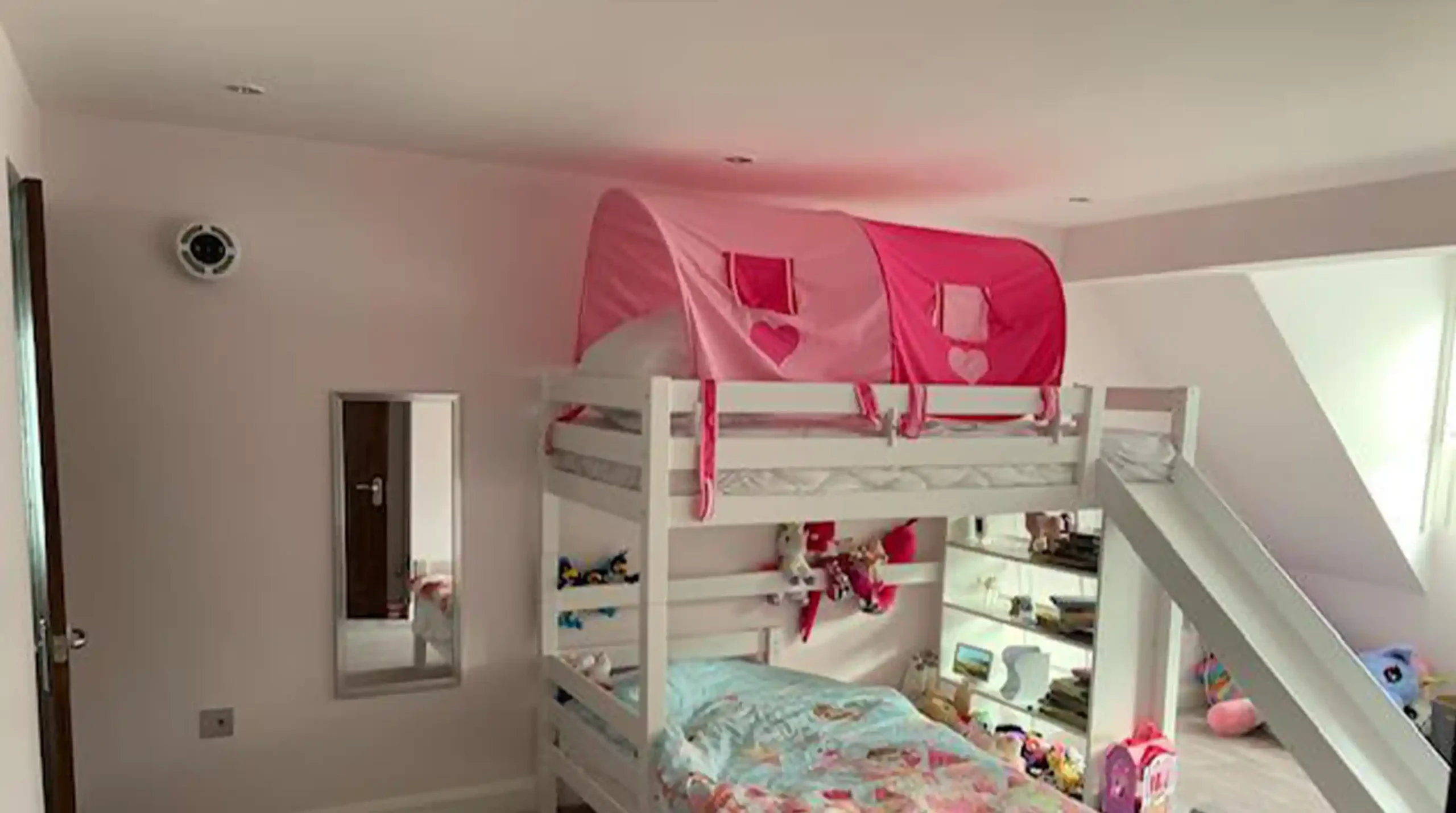
Frequent colds, a stuffy nose, coughing, dampness in the room, condensation on the windows and a musty smell — sometimes the issue may not only be seasonal viruses, but also the quality of the air your child breathes every day.
Children spend a significant amount of time indoors, particularly during autumn and winter. That is why it is important to maintain a comfortable indoor environment in a child’s bedroom: fresh air, controlled humidity and low levels of indoor pollutants.
One modern way to achieve this is through Heat Recovery Ventilation (HRV) — ventilation with heat recovery.
Why is indoor air quality important for children?
Children can be particularly sensitive to their surrounding environment. Poorly ventilated rooms can allow moisture, CO₂, odours, dust and other indoor pollutants to build up.
The UK Health Security Agency notes that children, particularly those aged 0–14, can be more vulnerable to the effects of damp and mould. Exposure to damp and mould has been associated with respiratory conditions, including asthma and lower respiratory tract infections in children.
The World Health Organization also highlights the relationship between persistent dampness, mould and an increased risk of respiratory symptoms, allergies and asthma.
Ventilation is therefore not simply a matter of comfort. It is an important part of creating a better indoor environment.
Why do poor indoor air quality, high humidity, mould, and fungus become more noticeable in winter?
During the colder months, British homes are often ventilated less frequently.
Windows remain closed to keep the warmth inside, while moisture continues to be produced:
- while sleeping;
- when cooking;
- during showers;
- when drying clothes;
- simply as a result of everyday household activities.
As a result, condensation can appear on windows, along with damp surfaces and conditions that can encourage mould growth.
And if you open a window to ventilate the room, you also allow valuable heat to escape.
This is where Heat Recovery Ventilation offers a key advantage.
How does a heat recovery ventilator work?
An HRV system simultaneously:
extracts stale air from the room → draws fresh air in from outside → transfers heat from the outgoing air to the incoming air.
This allows you to maintain continuous air exchange without having to keep your windows open.
This can be particularly useful in a child’s bedroom.
Your child can sleep with the window closed while the ventilation system continues to provide fresh air and remove stale, moisture-laden air.
Can ventilation help with frequent colds?
It is important to distinguish between two things.
A heat recovery ventilator is not a treatment for colds and cannot guarantee that a child will stop getting ill.
Colds and other respiratory infections are caused by viruses, and ventilation does not replace good hygiene, vaccination, medical care or other preventative measures.
However, good ventilation can help create a healthier and more comfortable indoor air environment.
UK Health Security Agency guidance states that good ventilation helps remove airborne particles that may contain viruses and can therefore reduce the risk of respiratory infections spreading indoors.
So rather than saying:
❌ “A heat recovery ventilator protects your child from colds.”
It is more accurate to say:
✅ “Good ventilation helps create a healthier and more comfortable indoor environment for your child.”
This is both more accurate and more professional.
PRANA and Climtec for children's bedrooms
At Brilydan, we offer modern heat recovery ventilation solutions, including systems from PRANA and Climtec.
These systems can be suitable for:
- private homes;
- flats and apartments;
- bedrooms;
- children’s bedrooms;
- living rooms;
- offices;
- educational premises;
- commercial premises.
Depending on the characteristics of the property, the right solution can be selected — from ventilation for an individual room to a more comprehensive system for the entire property.
Proper ventilation means less moisture — and fewer conditions for mould
One of the key factors contributing to mould growth indoors is excessive humidity.
The UK Health Security Agency notes that mould can develop as a result of condensation, poor heating or inadequate ventilation. Mould can also release spores into the air, which may affect indoor air quality and aggravate allergic and respiratory problems.
Effective humidity control is therefore an important part of addressing damp and mould.
An MHRV system helps continuously remove humid, stale air and replace it with fresh air from outside.
Important: if there is already significant mould growth or an underlying source of moisture, ventilation should not be considered the only solution. The cause of water ingress or excessive moisture should be addressed, and affected surfaces should be cleaned appropriately.
Why is proper ventilation particularly relevant to a child’s bedroom?
A child’s bedroom is a place where they spend many hours, often continuously overnight.
That makes it important to provide:
Fresh air — a continuous supply of fresh air.
Moisture control — control of excess humidity.
Better indoor air quality — improved quality of the air your child breathes.
Less condensation — fewer conditions that encourage condensation.
Mould prevention — helping to prevent conditions that can contribute to mould growth.
Quiet operation — comfortable ventilation while your child sleeps.
And importantly, all of this can be achieved without having to keep the windows open.
Do you need to open windows for ventilation in winter?
Opening a window remains a simple way to introduce fresh air into a room.
However, it has an obvious drawback: as stale air leaves the property, valuable heat is lost at the same time.
An HRV system works differently: heat from the outgoing air is transferred to the incoming fresh air, helping to minimise heat loss while maintaining ventilation.
This is why heat recovery ventilation is particularly appealing for British homes where homeowners want to combine fresh air, comfort and energy efficiency.
A healthy home starts with the air: the role of good ventilation
If your child gets frequent colds, this does not automatically mean that poor ventilation is the cause.
However, if you also notice:
- condensation on windows;
- high humidity;
- mould on walls;
- musty air;
- unpleasant odours;
- a feeling of “stale” or “heavy” air;
- inadequate ventilation in the bedroom,
it may be worth checking the ventilation in your home.
A modern Heat Recovery Ventilation / MVHR system can become an important part of creating a more comfortable indoor environment.
MVHR Prana and Climtec — fresh air for your home
At Brilydan, we can help you choose and install a suitable heat recovery ventilation system Prana and Climtec for your home, flat or business premises.
We consider the size of the room, its purpose, occupancy, the characteristics of the building and your specific ventilation requirements.
Don’t put your indoor air quality on hold.
📞 Call or WhatsApp: +44 7768 901186
Fresh air. Better comfort. A healthier indoor environment.

Want to know more?
Request a free consultation with our ventilation experts to discuss your specific needs.
Our Featured Glasses
-
Sale!

Climtec 200mm Activated Carbon Filter (Optional Upgrade)
£25Original price was: £25.£19Current price is: £19. -
Sale!
Climtec 200mm Decorative Outer Ring
£30Original price was: £30.£24Current price is: £24. -
Sale!
Climtec 100mm Decorative Outer Ring
£12Original price was: £12.£9Current price is: £9. -
Sale!
Climtec 100mm Activated Carbon Filter (Optional Upgrade)
£25Original price was: £25.£19Current price is: £19.

