The Secret to Perfect Sleep? It Was Hidden in the Wall All Along: Heat Recovery Ventilation & MVHR Systems
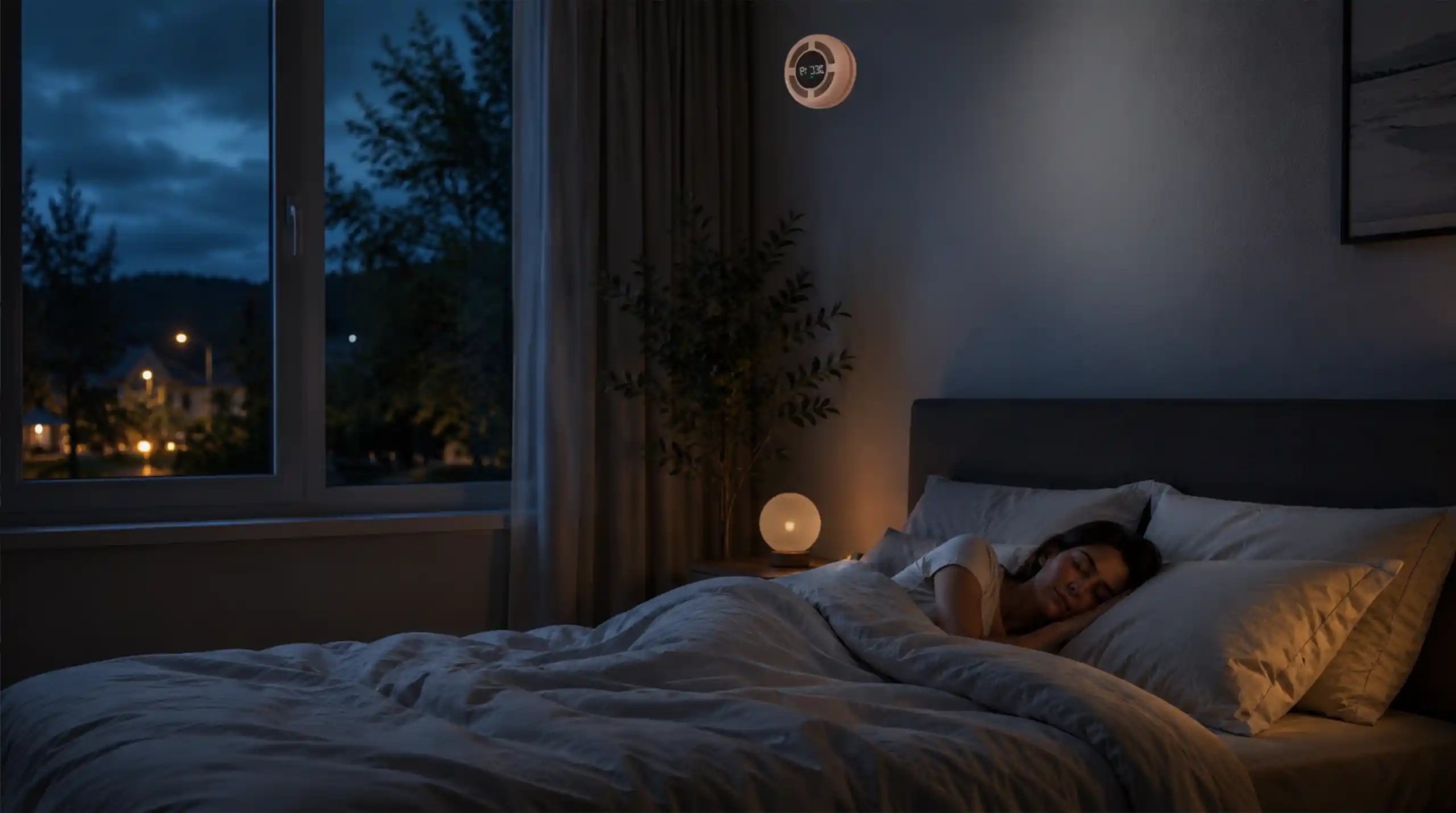
You have done everything by the book. The bedroom is dark. The temperature is cool. You stop looking at screens an hour before bed. You have tried magnesium, chamomile tea, sleep podcasts, weighted blankets, and every permutation of pillow firmness known to science.
And still — you wake up unrested. Groggy. As if sleep happened to you rather than for you.
Here is a possibility that almost nobody considers, and that the entire sleep supplement industry has a vested interest in you never discovering: the problem might not be your habits, your hormones, or your stress levels. It might be the air inside the four walls of your bedroom.
More specifically — it might be the absence of a simple hole in one of them.
What is the ventilation like in your bedroom at night?
A sealed bedroom — which describes almost every bedroom in Britain during the colder months — is a closed system. You breathe in oxygen and exhale carbon dioxide. You exhale moisture. Your body temperature warms the air around you. Over eight hours, without any ventilation, these things accumulate.
By morning in a typical British bedroom with the windows shut, CO₂ levels can be two to four times higher than what you would breathe in fresh outdoor air. Humidity rises. The air becomes stale in a way that is not dramatic enough to wake you, but persistent enough to subtly degrade the quality of every sleep cycle you pass through.
What this means in practice: you spend the hours you need most — deep, slow-wave sleep, REM sleep — in an environment that your body is quietly working against. You may technically sleep for eight hours and still wake up feeling as though you only managed five. You are not imagining it. Your sleep was genuinely less restorative than it should have been, and the air you were breathing is a significant part of why.
Poor bedroom ventilation is not a niche concern. It is one of the most consistent and least-discussed factors in sleep quality across the UK — and it disproportionately affects well-insulated, well-sealed homes, which is to say, most of the housing stock built or retrofitted in the last thirty years.
Why “just opening a window” for quality ventilation is an insufficient solution
The obvious response is to open the window. And on a mild, quiet night in May, that works reasonably well. But Britain is not mild and quiet for most of the year. A bedroom window left open in January sends heating costs skyward, invites traffic noise, and in urban areas introduces outdoor air pollution that may be marginally better than elevated CO₂ but hardly constitutes quality ventilation.
Extractor fans help with kitchens and bathrooms but are irrelevant to a bedroom. Air purifiers recirculate and filter the existing air, which reduces particulates — but they do not address CO₂ or introduce fresh air. Dehumidifiers tackle humidity but again, without air exchange, the fundamental problem remains.
What a bedroom actually needs is continuous, controlled wall ventilation: stale air out, fresh air in, quietly and constantly, regardless of season or weather. And crucially — without losing the warmth that makes the room comfortable to sleep in.
This is not a complicated idea. It is simply one that most homes were not built to deliver, and that most renovation guides have never thought to mention.
The heat recovery ventilation difference
A heat recovery ventilation unit changes the equation entirely. Rather than relying on gaps, guesswork, or an open window, it creates a deliberate, managed airflow through the exterior wall — drawing out the stale, CO₂-laden, humid air that has built up overnight, and replacing it with fresh air from outside.
The crucial detail is the heat exchanger at the unit’s core. Outgoing air passes through it and surrenders most of its warmth — which is then transferred to the incoming fresh air before it enters the room. You get the air quality benefits of an open window without the temperature drop, the noise, or the energy loss. In practice, a quality unit recovers up to 96% of the heat that would otherwise be lost, making it viable to run through the coldest months of the year without any meaningful impact on your heating bill.
The difference this makes to sleep is difficult to overstate once you have experienced it. The bedroom air simply stays fresher throughout the night. CO₂ does not accumulate. Humidity stays in check. Your body can do what it is supposed to do during sleep — repair, restore, consolidate — without fighting an invisible environmental disadvantage.
Through-the-wall MVHR systems units: less disruption than you might expect
When people hear “ventilation system“, they often picture building works, ductwork, scaffolding, and weeks of disruption. For whole-house MVHR systems, that picture is not entirely wrong — they are excellent, but they suit new builds or major renovations.
For a single bedroom, or any individual room that needs better air quality, a single room heat recovery unit is a different matter altogether. It requires a single core drilled through the exterior wall — a job that, in most properties, takes a few hours — and the unit itself sits flush and discreet on the internal wall surface. No ducts. No ceiling works. No upheaval.
The Prana wall ventilation units work on an alternating cycle: the same ceramic core draws fresh air in, then reverses to expel stale air, recovering heat throughout. The cycle is measured in minutes and operates below the threshold of normal awareness — most people report that they simply cannot hear it during sleep. It can be set to run continuously at a low background rate, or controlled automatically based on CO₂ and humidity sensors built into the unit.
For those who prefer continuous airflow — fresh air in and stale air out simultaneously, without the alternating pause — the Climtec twin-core system fits two ventilators side by side through the exterior wall, with one dedicated to supply and one to extract. The result is an uninterrupted exchange of air that suits larger bedrooms, open-plan sleeping areas, or anyone who wants the most consistent air quality possible throughout the night.
Both are whisper-quiet, both are controllable via app or wall panel, and both represent a permanent solution — not a temporary workaround. Proper house wall ventilation, fitted once, working every night, without further thought.
Improving sleep with dMVHR
The sleep industry is enormous and creative. Mattresses, supplements, apps, weighted blankets, sunrise alarm clocks — the list of things people will spend money on in pursuit of better rest is long and imaginative.
Very few of those things address the air. And yet air is the one thing your body cannot negotiate with. You can choose not to look at your phone. You cannot choose not to breathe.
A properly ventilated bedroom is, in a very real sense, the foundation that makes everything else about good sleep actually work. The darkness helps. The cool temperature helps. The routine helps. But if the air is stale, none of those things can fully compensate.
It is a small fix. It goes in the wall. And most people who make it wonder, with no small amount of frustration, why nobody told them sooner.
Your Heat Recovery Ventilation specialists
Operating out of Oldbury in the West Midlands, Brilydan delivers premium ventilation systems not only to our local Birmingham community but to homes and businesses right across the United Kingdom. We are intimately familiar with the specific demands of the UK weather, and we recognise that every property requires a tailored solution rather than a generic fix.
Are you frustrated by endlessly treating mould patches, cleaning condensation off your glass, and wasting precious heating energy through basic extractor fans? The moment has come to upgrade your approach.
If you’re ready to transform the air you breathe at home, browse our selection of Prana and Climtec heat recovery ventilators today. Alternatively, reach out to the Brilydan experts for a complimentary, pressure-free chat to discover the ideal system for your exact needs.

Want to know more?
Request a free consultation with our ventilation experts to discuss your specific needs.
Our Featured Glasses
-
Sale!

Climtec 200mm Activated Carbon Filter (Optional Upgrade)
£25Original price was: £25.£19Current price is: £19. -
Sale!
Climtec 200mm Decorative Outer Ring
£30Original price was: £30.£24Current price is: £24. -
Sale!
Climtec 100mm Decorative Outer Ring
£12Original price was: £12.£9Current price is: £9. -
Sale!
Climtec 100mm Activated Carbon Filter (Optional Upgrade)
£25Original price was: £25.£19Current price is: £19.

